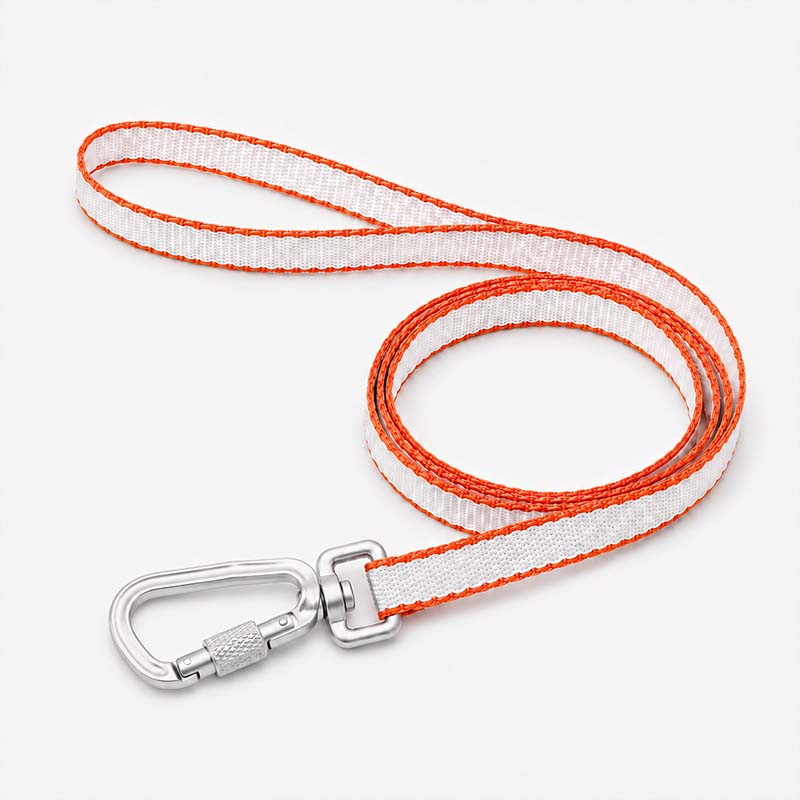
Use equipment intended for car travel while driving, and a walking leash for the walk after you park. A regular handheld dog leash is not a substitute for a vehicle restraint. A strong strap, metal clip, or short length does not establish that the complete setup is suitable for a collision.
That distinction matters when packing for a park visit, a trail outing, or a weekend away. Plan both the ride and the moment your dog leaves the vehicle. A lightweight leash can be convenient to carry for the outing; its walking function stays separate from the equipment securing your dog during the drive.
A walking leash and a car restraint have different jobs
On a walk, a person holds the leash and manages slack, distance, and changes of direction. Vehicle equipment has a different task and a specific installation. Do not turn a walking leash into a car tether by tying its handle to a seat or attaching it to a convenient point in the cabin.
Cornell’s guidance on traveling with dogs recommends securing dogs for the drive and choosing crash-tested travel equipment. It explains that loose pets can distract the driver and are vulnerable during sudden stops or accidents.
| Equipment | Intended job | What to verify |
|---|---|---|
| Handheld walking leash | Connect a handler to a dog on a walk | Walking reach, grip, clip closure, and the designated leash ring |
| Harness and restraint system intended for car travel | Secure the dog in the vehicle as its manufacturer specifies | Exact model and size, vehicle compatibility, installation, and crash-test evidence |
| Carrier or travel crate intended for car travel | Contain the dog during transport | Dog fit, latches, placement, securement instructions, and relevant crash-test evidence |
A harness with both walking and vehicle functions may have different attachment points or installation requirements for each use. Follow its instructions for the particular task; do not assume that every ring serves both purposes.
Why a stronger material does not answer the car question
UHMWPE can be useful in a slim walking leash. The material name does not specify a vehicle installation, demonstrate collision performance, or establish how a complete system behaves in a crash. A webbing sample test also cannot rate the assembled strap, stitching, clip, attachment ring, and vehicle connection together.
The same principle applies to hardware. Hardware material: Aircraft-Grade Aluminum. That label identifies a material; it does not establish automotive testing or certification. Our guide to strength and complete-leash evidence explains this distinction. For everyday closure and ring fit, see the dog leash clip and buckle guide.
Check the exact travel product and its instructions
Start with the manufacturer’s intended use, the size that fits your dog, and an installation your vehicle supports. Then examine the test information for that product. A claim about one design should not be transferred to a similar-looking model.
The Center for Pet Safety certification program describes independently developed standards and a voluntary manufacturer commitment to testing requirements, quality control, and truthful marketing. Its directory is a useful place to check a certification claim. Certification of another product does not apply to an ordinary walking leash.
| Claim or detail | What it describes | What to check next |
|---|---|---|
| Strong fiber or webbing | A material property or sample test | Evidence for the complete restraint system in its intended vehicle configuration |
| Crash-tested | A test under stated conditions | Who tested it, the exact model and size, the setup, and the result |
| CPS Certified | Participation in the Center for Pet Safety certification program | The current listing and the manufacturer’s fitting and installation instructions |
| Carabiner-style clip | The shape of a closure | Intended use; shape alone does not establish vehicle suitability |
Keep the instructions with the travel equipment. If its fit or installation is unclear, resolve that with the manufacturer before the trip rather than improvising a connection.
Plan the transition from the parked car to the walk
The American Red Cross’s pet travel guidance says not to let a pet out of a car without proper restraint. Plan that transition before arriving at a busy parking area.
- Park fully in a suitable place away from moving traffic before preparing to unload your dog.
- Have the walking leash ready and check its clip, strap, and handle. Keep your dog contained while preparing the walking connection, following the travel system’s instructions.
- Attach the leash to the collar or harness’s designated walking point and check that the closure is unobstructed. Where equipment allows, establish that connection before releasing the vehicle restraint or opening the carrier for exit. If you cannot manage the transfer while maintaining control, keep the dog contained and seek suitable help.
- Keep hold of the leash as you guide the dog out. Manage spare line around doors, feet, and nearby people before beginning the walk.
For the return journey, follow the vehicle system’s instructions again and stow the walking leash clear of pedals and doors. Practice the equipment routine while parked in a quiet place, rather than making a crowded trailhead the first attempt.
Choose a leash for the walk after arrival
For a handheld walking option, the FeatherStrong™ Ultralight UHMWPE Dog Leash from FeatherStrong™ by SOLISZEN has a woven strap and a hand loop. Its regular lengths are 1.5 m (approximately 5 ft) and 1.8 m (approximately 6 ft). The listing measures the webbing including the hand loop and excluding the metal clip; the clip adds length to the finished leash.
Choose the walking reach for your dog, your grip, and the space you will share. Our dog leash length guide can help with that choice. Inspect the complete leash before each outing using the care and buying guide.
The Ultralight listing excludes vehicle restraint use. It is an option for the walk after arrival, not equipment for securing a dog while the car is moving.
Need a different walking length?
Email wendy.soliszen@gmail.com with the exact model, measurement endpoints and whether the handle and clip are included, units, and delivery country. Confirm available specifications, price, and lead time before ordering. A custom walking length does not change the product’s intended use into a vehicle restraint.
Frequently asked questions
Can I use a short dog leash as a seat belt?
Do not use a regular walking leash as a substitute for equipment intended for vehicle restraint. A shorter strap does not establish a suitable installation or crash performance.
Does a metal clip make a leash suitable for car travel?
No. Clip material and closure shape do not demonstrate the performance of a complete vehicle restraint system. Check the intended use and evidence for the exact travel product.
Should I bring a walking leash if my dog travels in a carrier?
Yes. Plan a controlled transfer for breaks and arrival, using the walking leash outside the car and the carrier’s instructions for transport. Keep the leash accessible without leaving loose line where it can interfere with driving.