Shipping $15 under $60 | Free shipping at $60 or more | Ships from China

Category: Dog Leash Guides

Leash selection, sizing, training, materials and care guides for safer everyday walks.

  • Rope vs Flat Dog Leash: Grip, Bulk, and Handling

    A rope dog leash and a flat dog leash can use the same fiber but feel different in the hand because their profiles are different. Neither shape is automatically better. Compare the complete leash, grip profile, bulk, length, clip fit, visible wear, and the individual dog’s behavior before choosing.

    What is the construction difference?

    A rope leash has a round or nearly round cross-section. Its strands may be braided into a cord that bends in several directions. A flat leash uses woven webbing with defined faces and edges. It usually folds across its width when coiled or gathered.

    Shape and fiber are separate questions. Both FeatherStrong™ examples in this guide use UHMWPE, but one uses 8 mm braided round rope and the other uses flat webbing that measures 10 mm wide × 2.8 mm thick. Those dimensions describe different geometries and should not be used as a direct strength comparison.

    Rope vs flat dog leash at a glance

    The specifications below apply to the two named FeatherStrong™ products. They are not universal specifications for all rope and flat leashes.

    Check8 mm rope leash10 mm flat leash
    ProfileBraided round ropeFlat woven webbing
    Published dimensions8 mm diameter10 mm wide × 2.8 mm thick
    Standard lengths1.5 m (5 ft); 1.8 m (6 ft)1.5 m (approximately 5 ft); 1.8 m (approximately 6 ft)
    Short optionNot listed on this model49 cm (19.3 in), webbing length excluding clip
    Webbing or rope materialUHMWPEUHMWPE
    Hardware materialAircraft-Grade AluminumAircraft-Grade Aluminum
    Published finished load ratingNone statedNone stated

    Compare the grip profile in your hand

    A rounded leash contacts the hand differently from flat webbing. A flat strap presents a wider face when it lies flat, while a round rope presents a more even curved surface. The practical preference depends on hand size, grip style, flexibility, handle construction, weather, and how much tension the dog places on the leash.

    Test the actual handle in the position you normally use. Check the opening, stitching, edges or rope surface, and how easily you can release and gather slack. Do not wrap any leash around your fingers, hand, or wrist. A comfortable feel during a calm walk does not guarantee comfort under sudden tension.

    The American Kennel Club recommends considering handler comfort, dog size, training level, activity, and complete construction when choosing a leash. Its dog leash overview describes common leash formats but does not establish one profile as best for every dog and handler.

    Compare bulk, coiling, and storage

    Round rope and flat webbing can occupy space differently when gathered. Rope bends around its diameter, while flat webbing can stack, fold, or twist across its faces and edges. Construction, stiffness, length, moisture, and the size of the handle all affect how the finished leash coils.

    If compact storage matters, compare the actual finished products rather than estimating from diameter or width alone. Coil the leash without forcing sharp folds, and store it dry with the clip able to move freely. Neither the 8 mm diameter nor the 10 mm width establishes the complete leash’s weight or packed size.

    Inspect wear according to the leash shape

    For a rope leash, look around the full circumference. Check for cuts, heavy abrasion, flattened or distorted areas, damaged braid, pulled strands, and changes near stitched or folded connections. Rotate the rope as you inspect it so damage is not hidden on the underside.

    For flat webbing, inspect both faces and both edges. Look for cuts, glazing, heavy abrasion, edge damage, permanent folds, separated layers, loose thread, or movement at stitched sections.

    For either shape, inspect the handle, every connection, and the dog-side clip before each walk. Open and close the gate, then confirm that it closes fully around the collar or harness ring. Stop using the leash if any part is cut, cracked, bent, loose, heavily worn, or no longer closes securely. See the UHMWPE dog leash care and buying guide for cleaning and whole-leash inspection.

    Length still changes the handling task

    Both compared models offer 1.5 m (5 ft) and 1.8 m (6 ft) versions. The 1.5 m option keeps the dog somewhat closer, while the 1.8 m option provides approximately 30 cm (about 1 ft) more walking room. Choose according to the route, local requirements, handler height, the dog’s training, and how much slack can be managed safely.

    The flat FeatherStrong™ Ultralight UHMWPE Dog Leash also offers a 49 cm (19.3 in) close-control option. On that product, 49 cm is the webbing length and excludes the metal clip. A short leash should be checked against the actual dog and handler position; it is not automatically the best choice for a large or small dog. Compare the practical reach of each option in our dog leash length guide.

    Material properties do not rate the finished leash

    UHMWPE is known for high material strength relative to fiber weight, abrasion resistance, and low elongation. These properties help explain why the fiber can be used in braided rope and slim webbing. They do not establish the strength of a completed leash. The handle, stitching, folded sections, rings, clip, and every connection remain part of the finished load path.

    Both compared models list the dog-side clip material as Aircraft-Grade Aluminum. The material name alone does not establish an alloy grade, aviation certification, finished-product working load, breaking strength, or suitability for a particular dog. Review the dog leash clip and collar buckle guide for closure and attachment checks, and the UHMWPE dog leash and collar guide for material benefits and evidence limits.

    Compare the two FeatherStrong™ leash models

    The FeatherStrong™ 8 mm UHMWPE Rope Dog Leash uses braided round rope and is available in 1.5 m (5 ft) and 1.8 m (6 ft). It is intended for supervised single-dog walking.

    The FeatherStrong™ Ultralight UHMWPE Dog Leash uses 10 mm-wide × 2.8 mm-thick flat webbing. It is available in 49 cm (19.3 in), 1.5 m (approximately 5 ft), and 1.8 m (approximately 6 ft), also for supervised single-dog walking.

    Neither product page publishes a finished-product working-load, breaking-strength, or maximum dog-weight rating. Do not choose between them by assuming that 8 mm rope is stronger or weaker than 10 mm flat webbing. For a dog that pulls hard or lunges, choose a complete walking setup with tested ratings appropriate to the individual dog and situation, and address controlled leash skills.

    When a custom size may help

    If the standard construction and lengths do not fit the dog, handler, or route, SOLISZEN can review a custom request. Email wendy.soliszen@gmail.com with the product model, requested measurement and unit, what the measurement includes, typical walking use, and the delivery country. SOLISZEN will confirm feasibility, final specifications, price, and lead time before an order is placed. Follow the details in the custom dog leash length request guide.

    Frequently asked questions

    Is a rope dog leash stronger than a flat leash?

    Shape and one published dimension cannot answer that question. Compare product-specific testing for the complete leash, including the handle, stitching, hardware, and connections. The two FeatherStrong™ models in this guide do not have published finished-product load ratings.

    Which shape is better for a dog that pulls?

    Neither profile fixes pulling. Check tested finished-product ratings, grip security, collar or harness fit, clip compatibility, and the handler’s ability to manage the dog. Training and behavior matter more than choosing a round or flat profile by itself.

    Is an 8 mm rope leash only for small dogs?

    No body-size category can be assigned from diameter alone. Review the individual dog’s pulling behavior, the route, handling needs, attachment fit, and verified finished-product information.

    Does UHMWPE make either leash shock absorbing?

    No. UHMWPE has a low-stretch feel and should not be described as a shock-absorbing bungee material.

    How should rope and flat UHMWPE leashes be cleaned?

    For these models, wipe the leash with a damp cloth and let the rope or webbing and hardware air-dry completely before storage. Avoid harsh chemicals and uncontrolled heat. Inspect the entire leash again before use.
  • Dual Dog Leash Guide: Walking Two Dogs With One Leash

    A dual dog leash lets one handler walk two dogs from one handle. It can reduce the need to juggle two handles, but it does not make every pair easier to manage. The dogs’ leash skills, pace, relationship, attachment fit, and the handler’s control matter more than the convenience of the format.

    What is a dual dog leash?

    A dual dog leash, sometimes called a double dog leash, divides into two dog-side branches. Each branch clips to one dog while the handler holds one hand loop. A coupler usually adds two short branches to a separate leash. Product names vary, so check the actual layout rather than relying on the label.

    Look for one secure handler connection, two clearly separated branches, and one compatible clip for each dog. A dual-dog design is different from a single-dog leash with a second traffic handle.

    Which dogs are good candidates?

    Two dogs are better candidates when each can already walk on a loose leash, they are comfortable near each other, and they prefer a similar walking pace. A calm pair that moves and pauses together is easier to manage than dogs that constantly cross, pull in opposite directions, or react differently to the same trigger.

    Practice with each dog separately before combining them. Then begin together in a quiet, familiar area. Keep the first sessions short and watch whether either dog loses access to space, becomes frustrated, or changes behavior when attached close to the other dog.

    A dual leash may be a poor choice when either dog lunges, pulls strongly, reacts to dogs or people, guards space, tries to play throughout the walk, or cannot move comfortably beside the other dog. Separate walks or two handlers may provide better control. Qualified training help can be useful when behavior makes combined walks difficult to manage safely.

    Dual dog leash checks at a glance

    CheckWhy it mattersWhat to compare
    Dog compatibilityThe dogs have less room to separateRelationship, pace, reactions, and walking preferences
    Individual leash skillsOne dog’s pulling affects the whole systemLoose-leash walking, response to cues, and sudden lunging
    Branch layoutBranch length affects spacing and crossingConnection point, equal or adjustable branches, and room to move
    Overall lengthReach and slack change with the routeHandler height, traffic, open space, and required control
    Clips and ringsEach connection must close securelyGate closure, ring fit, movement, and visible condition
    Finished constructionEvery part shares the walking loadWebbing, stitching, handle, ring, clips, and published ratings

    Choose the branch layout before the material

    The split point and branch lengths determine how much independent movement each dog has. Short branches keep the dogs close but can make mismatched pace or height more noticeable. Longer branches provide more individual space but create more slack to manage and more opportunity for crossing.

    If the dogs differ in height, stride, or preferred position, adjustable branches may be easier to balance than two fixed branches. Confirm exactly which section a listed length measures. It may refer to the complete leash, the main handle section, or a dog-side branch. If the page does not define the measurement, ask before ordering.

    Compare 5 ft and 6 ft with the walking route

    A 1.5 m (approximately 5 ft) dual leash can help keep the pair closer on sidewalks or in other controlled settings. A 1.8 m (approximately 6 ft) option gives somewhat more reach where space allows. The better choice depends on handler height, the product’s measurement definition, branch layout, and how much slack the handler can manage before either dog reaches a hazard.

    Length should not be chosen from dog size alone. Review the route and handling task, then compare the general tradeoffs in our dog leash length guide.

    Material properties do not rate the finished leash

    UHMWPE is used for high strength relative to material weight, abrasion resistance, and low elongation. Those material properties can support slim, lightweight webbing, but they do not establish the working load or breaking strength of a complete dual leash. The handle, both branches, stitching, central connection, clips, and every folded section are part of the finished system.

    The FeatherStrong™ hardware material name is Aircraft-Grade Aluminum. That name does not by itself establish an alloy grade, aviation certification, finished-product load rating, or suitability for a particular pair of dogs. Check the clip shape, gate action, attachment fit, condition, and any product-specific test information. Read the dog leash clip and collar buckle guide for a focused hardware checklist.

    How to assess the FeatherStrong™ Orange & White dual leash

    The FeatherStrong™ Orange & White UHMWPE Dual Dog Leash has one handle, two woven branches, and two dog-side clips. Its flat UHMWPE webbing measures 11.2 mm wide and 2.6 mm thick. The two dog-side clips are Aircraft-Grade Aluminum. Current options are 1.5 m (approximately 5 ft) and 1.8 m (approximately 6 ft).

    SOLISZEN does not publish a finished-product working load, breaking strength, or recommended dog-weight rating for this model. Do not decide that it suits a pair of dogs from the webbing width or material names alone. Compare both dogs’ pulling behavior, the combined handling demand, clip-to-ring fit, branch spacing, and the environment.

    See the current specifications and availability on the FeatherStrong™ Orange & White UHMWPE Dual Dog Leash product page.

    Set up and test the leash step by step

    1. Inspect the handle, both branches, stitching, central connection, and both clips.
    2. Fit each dog’s collar or harness correctly before attaching the leash.
    3. Clip one branch to each dog and confirm both gates close fully around the attachment rings.
    4. Begin in a quiet area with enough room to stop without blocking traffic.
    5. Keep the leash out of the dogs’ legs and do not wrap it around fingers, hands, or wrists.
    6. Stop if the dogs cross repeatedly, pull against each other, show conflict, or become difficult to control.

    Keep combined walks supervised and stay engaged with both dogs. Continue occasional one-on-one walks so you can observe each dog’s movement, comfort, and leash behavior separately.

    Inspect before every walk

    • Check both webbing branches for cuts, heavy wear, glazing, or damaged edges.
    • Look for loose thread, separation, or movement at stitched and folded sections.
    • Open and close both clips; stop using the leash if either clip is cracked, bent, loose, or fails to close securely.
    • Check the central connection and handle for deformation or damage.
    • Wipe with a damp cloth and air-dry fully before storage; avoid harsh chemicals, flames, and high heat.

    This is supervised pet-walking equipment. Do not use it for climbing, rescue, lifting, fall protection, vehicle restraint, or unattended tie-outs. Our UHMWPE dog leash care and buying guide covers cleaning and full-leash inspection in more detail.

    When a custom size may help

    If the available layout or length does not suit the dogs and handler, SOLISZEN can review a custom request. Email wendy.soliszen@gmail.com with the product model, requested measurements and units, what each measurement includes, both dogs’ walking positions, and the delivery country. SOLISZEN will confirm feasibility, final specifications, price, and lead time before an order is placed. Use our custom dog leash length request guide to prepare the details.

    Frequently asked questions

    Is a dual dog leash suitable for dogs of different sizes?

    It can be, but size difference is only one factor. Compare the dogs’ height, pace, leash skills, behavior, attachment points, and branch layout. Separate walks may work better when the dogs cannot move comfortably together.

    Will a dual leash stop tangling?

    No leash guarantees a tangle-free walk. One handle can reduce handle juggling, but dogs can still cross paths. Training, compatible pace, branch layout, and active slack management remain important.

    Can one dog pull the other dog?

    Yes. Tension from one branch reaches the shared connection and can affect the other dog and handler. Do not use a dual leash as a substitute for individual loose-leash training.

    Should I choose a fixed or adjustable dual leash?

    A fixed layout is simple when both dogs move comfortably at a similar pace and position. Adjustable branches can help when stride, height, or preferred position differs, but every adjustment point adds another connection to inspect. Choose from the actual dogs, route, and product construction.

  • Choosing a Dog Leash for a Large Dog: Strength, Grip, and Hardware

    A dog leash for a large dog should be chosen as a complete system. Check the finished leash’s published load information, handle comfort, clip and connection fit, stitching, length, and the individual dog’s pulling behavior. Body size matters, but it does not answer those questions by itself.

    Start with the dog’s behavior and walking environment

    Two large dogs of similar weight can place very different demands on a leash. A trained dog that walks with slack creates a different handling situation from a dog that lunges, pulls hard, or reacts suddenly. Consider the dog’s current training, the handler’s grip and balance, and whether the route includes traffic, crowds, narrow sidewalks, or open space.

    If the dog can generate strong or sudden force, look for a finished leash with a manufacturer-published working-load or breaking-strength value that is appropriate for that dog and use. Confirm what the number measures, which product configuration was tested, and whether it applies to the entire leash rather than the webbing alone. If the information is unavailable, do not replace it with an estimate based on breed, width, or material.

    Material strength is not the same as finished-leash strength

    UHMWPE is known for high strength relative to material weight, abrasion resistance, and low elongation. Those properties help explain why it is used in slim, lightweight webbing. They do not establish the safe load of a dog leash. Finished performance also depends on the stitching pattern, folded connections, handle construction, clip, and any rings or adjustment points.

    A wider leash is not automatically stronger, and a narrow leash is not automatically weak. Width can affect grip and contact area, but the finished assembly must be evaluated separately. Read our UHMWPE dog leash and collar guide for the material benefits and their limits.

    Choose a grip you can control comfortably

    Grip is especially important when a larger dog changes direction or adds tension. Compare the handle opening, edge feel, webbing width, flexibility, and any padding. A handle can feel comfortable during a calm walk but become difficult to hold when wet or under sudden tension. Test the grip in the hand position you normally use, without wrapping the leash around your fingers or wrist.

    Some handlers prefer more width or padding because it spreads pressure across the hand. Others prioritize lower bulk and easier coiling. Appearance can be part of the choice, but it should follow secure control and verified product suitability.

    Inspect the clip and attachment point

    The dog-side clip must match the collar or harness ring. Open and close the gate several times, then confirm that it closes completely without the ring crowding the mechanism. Check that the clip cannot bind at an awkward angle and that every connecting part is free from cracks, bending, sharp edges, looseness, or heavy wear.

    FeatherStrong™ leash hardware material is Aircraft-Grade Aluminum. This identifies the material name used by SOLISZEN; it does not by itself prove an alloy grade, certification, working load, breaking strength, or suitability for a particular dog. The clip’s shape, gate, connection, condition, and any published finished-product test information still matter. See our dog leash clip and collar buckle guide for a fuller hardware checklist.

    Large-dog leash checks at a glance

    CheckWhy it mattersWhat to verify
    Finished strengthMaterial data does not cover every connectionPublished rating, test scope, and exact product configuration
    Pulling behaviorSudden force changes the handling demandTraining level, lunging, reactions, and route
    GripThe handler must retain comfortable controlHandle opening, width, edges, padding, and wet feel
    Clip and ringA poor match can prevent secure closureFull gate closure, movement, fit, and visible condition
    Stitching and connectionsThey are part of the finished load pathLoose thread, cuts, separation, deformation, or wear
    LengthSlack and reach change with the routeHandler height, traffic, open space, and training needs

    Does a large dog need a short leash?

    Not always. A shorter leash can support close handling in crowded areas, but it can also create an uncomfortable reach if it is too short for the handler and dog. A 1.5 m (approximately 5 ft) or 1.8 m (approximately 6 ft) leash may provide a more natural walking position where the environment allows it. The handler must still be able to manage slack before the dog reaches a hazard.

    Choose length for the route and handling task instead of using body size as the only rule. Compare close-control, 5 ft, and 6 ft options in our dog leash length guide.

    How to assess a slim FeatherStrong™ leash

    The FeatherStrong™ Ultralight UHMWPE Dog Leash uses 10 mm-wide × 2.8 mm-thick UHMWPE webbing and an Aircraft-Grade Aluminum clip. It is currently offered in 49 cm (19.3 in), 1.5 m (approximately 5 ft), and 1.8 m (approximately 6 ft). The 49 cm measurement is the webbing length and excludes the metal clip.

    SOLISZEN does not publish a finished-product working load, breaking strength, or maximum dog-weight rating for this model. Its 10 mm width and UHMWPE material therefore do not establish large-dog suitability. Review the individual dog’s pulling behavior, grip needs, attachment fit, and walking environment. For a strong puller, choose equipment with a published tested rating appropriate to that dog and situation.

    Current specifications and availability are listed on the FeatherStrong™ Ultralight UHMWPE Dog Leash product page.

    Inspect before every walk

    • Run your hands and eyes along the webbing for cuts, heavy abrasion, glazing, or damaged edges.
    • Check every stitched and folded section for loose thread, separation, or movement.
    • Open and close the clip, then confirm secure attachment to a suitable collar or harness ring.
    • Replace the leash if any part is loose, cut, cracked, bent, heavily worn, or no longer closes securely.

    This is supervised pet-walking equipment. Do not use it for climbing, lifting, fall arrest, human safety, vehicle restraint, overhead use, or unattended tie-outs. Our UHMWPE dog leash care and buying guide covers cleaning, drying, and routine inspection.

    When a custom length may help

    If the standard lengths do not suit the dog, handler, or route, SOLISZEN can review a custom-length request. Email wendy.soliszen@gmail.com with the product model, requested measurement and unit, whether the length includes the clip and handle, typical walking behavior, and delivery country. SOLISZEN will confirm feasibility, final specifications, price, and lead time before an order is placed. Follow the details in our custom dog leash length request guide.

    Frequently asked questions

    Is a wider leash always stronger?

    No. Width can affect grip and bulk, but finished strength depends on the webbing, stitching, handle, hardware, and connections. Use comparable product-specific test information when strength is critical.

    Can a 10 mm leash be used with a large dog?

    Width alone cannot answer that question. Check the finished leash’s published rating, the dog’s pulling behavior, grip comfort, hardware fit, and the walking environment. FeatherStrong™ does not publish a maximum dog-weight or finished-product load rating for this model.

    Does UHMWPE make a leash shock absorbing?

    No. UHMWPE has a low-stretch feel and should not be described as a shock-absorbing bungee material.

    What should I do if my large dog pulls hard?

    Choose a complete walking setup with verified product ratings appropriate to the dog and situation, confirm collar or harness fit, and work on controlled leash skills. Seek qualified training guidance when pulling or lunging is difficult to manage safely.

  • How to Choose a Lightweight Dog Leash for a Small Dog

    A lightweight dog leash for a small dog should feel proportionate without sacrificing secure attachment or comfortable handling. Look at the complete leash—not only the webbing. The clip, stitching, handle, length, and the collar or harness connection all affect how the leash feels in use.

    What “lightweight” should mean for a small dog

    For a smaller dog, unnecessary bulk can make a leash feel awkward. A large clip may crowd a small attachment ring, while thick webbing may be harder for the handler to coil or hold. A lighter, slimmer setup can reduce that bulk, but the goal is a complete walking system that fits the dog and the route.

    Do not choose by the word “lightweight” alone. If a seller publishes the finished leash weight, compare the same length and hardware configuration. If no finished-product weight is published, evaluate the visible dimensions, clip size, connection fit, and how the leash feels when attached. SOLISZEN does not publish a finished weight for the FeatherStrong™ leash, so this guide does not assign one.

    Start with the clip and connection point

    The dog-side clip should attach cleanly to the collar or harness ring. Check that the gate opens without scraping against nearby hardware, closes completely, and cannot sit partly open because the ring is too thick or crowded. After clipping in, rotate the connection gently and confirm that it can move without binding.

    Hardware material is only one part of the decision. FeatherStrong™ uses Aircraft-Grade Aluminum, while the clip shape, gate action, stitching, and ring compatibility must still be checked as a complete system. Our dog leash clip and collar buckle guide explains what the material name does—and does not—tell you.

    A small dog does not automatically need the shortest leash

    Choose length for the walking environment, the handler’s height, and the amount of room the dog needs. A very short leash can require a tall handler to reach down or keep the dog unusually close. A longer everyday leash may allow a more natural arm position, provided the route has enough space and the handler can manage slack safely.

    For many everyday walks, 1.5 m (approximately 5 ft) or 1.8 m (approximately 6 ft) gives more walking room than a short-control leash. The 49 cm (19.3 in) FeatherStrong™ option is designed for close handling, and its measurement covers the webbing only, excluding the metal clip. Compare the use cases in our dog leash length guide before choosing.

    How 10 mm UHMWPE webbing changes the feel

    The FeatherStrong™ Ultralight UHMWPE Dog Leash uses webbing that is 10 mm wide and 2.8 mm thick. This slim profile reduces visual and physical bulk. UHMWPE is selected for low material weight, abrasion resistance, and high material tensile strength. It also has a low-stretch feel, so it does not behave like a shock-absorbing bungee leash.

    A 10 mm width is not a dog-size rating. Material properties and width do not establish the safe load of the finished leash. Stitching, hardware, connections, pulling force, behavior, and the walking environment all matter. This model has no published finished-product working-load, breaking-strength, or maximum dog-weight rating. Read our UHMWPE dog leash and collar guide for the material benefits and buying limits.

    FeatherStrong™ size options at a glance

    SpecificationCurrent optionWhat to check
    WebbingUHMWPE, 10 mm wide × 2.8 mm thickGrip, visible wear, stitching, and handling comfort
    Hardware materialAircraft-Grade AluminumGate closure and fit with the collar or harness ring
    49 cm (19.3 in)Short, close-control option; webbing length excludes the clipWhether the reach is comfortable for both dog and handler
    1.5 m (approximately 5 ft)Everyday walking optionRoute space and manageable slack
    1.8 m (approximately 6 ft)More walking roomSurroundings, training, and handler control

    Both White & Orange and White & Green are currently offered in all three lengths. Check the FeatherStrong™ Ultralight UHMWPE Dog Leash product page for current availability and pricing.

    A practical small-dog leash checklist

    • Connection: The clip fits the collar or harness ring and closes fully.
    • Complete setup: The leash and clip do not create awkward bulk at the dog’s attachment point.
    • Length: The handler can walk upright while managing slack for the route.
    • Grip: The handle and webbing remain comfortable to hold and control.
    • Behavior: The equipment suits the individual dog’s pulling force, training, and reactions.
    • Condition: Webbing, stitching, clip, and connection points are checked before every walk.

    Replace the leash if any part is cut, loose, cracked, bent, heavily worn, or no longer closes securely. Pet-walking equipment should not be used for climbing, lifting, fall arrest, vehicle restraint, overhead use, or unattended tie-outs.

    When a custom length may help

    If the standard lengths do not suit the dog, handler, or route, SOLISZEN can review a custom-size request. Email wendy.soliszen@gmail.com with the product model, the required measurement definition, centimeters or inches, and the delivery country. SOLISZEN will confirm feasibility, final specifications, price, and lead time before an order is placed. Use our custom dog leash length and collar size request guide to prepare the details.

    Frequently asked questions

    Is a 10 mm leash only for small dogs?

    No. Width alone does not determine suitability. Evaluate the finished leash, the dog’s pulling force and behavior, connection fit, and any published load information. FeatherStrong™ does not publish a maximum dog-weight or finished-product load rating for this model.

    Should a small dog always use the shortest leash?

    No. A short leash is useful for close handling, but handler height and the walking environment may make a 5 ft or 6 ft leash more comfortable. Choose the length that allows safe slack management and a natural handling position.

    Does Aircraft-Grade Aluminum prove the clip’s load rating?

    No. It identifies the hardware material used by SOLISZEN. It does not, by itself, establish an alloy grade, certification, finished-product breaking strength, or working-load limit.

    What if I need a length between the standard options?

    Send the product model, required measurement, unit, and delivery country to wendy.soliszen@gmail.com. A custom request is reviewed before specifications, price, and lead time are confirmed.

  • Custom Dog Leash Lengths and Collar Sizes: How to Request Yours

    A custom dog leash or collar request is easier to review when the measurement definition is clear. Before emailing SOLISZEN, choose the closest product from the FeatherStrong™ range, record the requested dimensions and units, and explain how you measured. SOLISZEN will then confirm whether the specification is available, along with the price and lead time, before you order.

    Check the standard sizes first

    Current FeatherStrong products already cover several common sizes. Availability and prices can change, so use the product page as the current reference.

    Product Current standard options Check before requesting custom sizing
    FeatherStrong™ Ultralight UHMWPE Dog Leash 49 cm (19.3 in), 1.5 m (approximately 5 ft), or 1.8 m (approximately 6 ft) The 49 cm option lists webbing length and excludes the metal clip. State exactly what your requested length should include.
    FeatherStrong™ Ultralight UHMWPE Dog Collar – 10 mm S: 22–35 cm (8.7–13.8 in); M: 35–57 cm (13.8–22.4 in) Measure the neck where the collar will sit and identify the 10 mm profile.
    FeatherStrong™ Lightweight UHMWPE Dog Collar – 20 mm S: 22–35 cm (8.7–13.8 in); M: 35–57 cm (13.8–22.4 in) Measure the neck and identify the 20 mm profile. Width does not change between S and M.

    If one of these options fits, ordering the standard product is usually the clearest path. A custom request is useful when the required leash length or collar adjustment range falls outside the listed options, or when you need SOLISZEN to review a specific measurement.

    How to request a custom dog leash length

    Start with the exact product name or product-page link. Then provide one requested length in centimeters, meters, inches or feet. Do not send a number without a unit.

    Define the endpoints. For example, say whether the requested length is:

    • the webbing only;
    • the webbing plus the dog-side clip;
    • the complete leash from the end of the handle to the end of the clip; or
    • another clearly described measurement.

    Also describe the intended walking situation, such as close handling or ordinary neighborhood walks. This context explains the request, but it does not establish that a length is safe for every dog or environment. Leash width, grip, the dog’s pulling behavior, connection points and the complete product still matter.

    For help comparing common lengths before requesting a custom option, read How Long Should a Dog Leash Be?

    How to request a custom dog collar size

    Measure the dog’s current neck circumference where the collar will normally rest. Use a flexible measuring tape, keep it level and allow the same comfortable space you want under the finished collar. Record the actual fitted measurement rather than choosing by breed or body weight.

    In the email, state whether the number is the dog’s neck circumference, an existing collar measurement or a preferred adjustable range. These are different measurements and should not be treated as interchangeable. If you measured an existing collar, describe the two points you measured between.

    Include the preferred webbing width or link to the closest product. The current FeatherStrong range includes 10 mm and 20 mm collar profiles. A width preference does not by itself determine suitability; fit, the dog’s behavior and complete construction also matter.

    Growing puppies and dogs whose coat changes substantially should be measured again close to ordering. See How to Measure Dog Collar Size for the full measuring and fit guide.

    What to include in your email

    Information Dog leash request Dog collar request
    Product Product name or link, color preference if relevant Product name or link, preferred width and color if relevant
    Measurement Requested length and exact endpoints Current neck circumference and preferred adjustable range
    Units cm, m, in or ft cm or in
    Context Intended walking situation and any handling requirement Where the neck was measured; puppy or major coat change if relevant
    Delivery Destination country Destination country

    Email template for a leash request

    Subject: FeatherStrong Custom Leash Length Request

    Product name or link:
    Color preference:
    Requested length:
    Unit:
    The requested length includes:
    Intended walking situation:
    Delivery country:
    Other details:

    Email template for a collar request

    Subject: FeatherStrong Custom Collar Size Request

    Product name or link:
    Preferred width and color:
    Measured neck circumference:
    Unit:
    How and where I measured:
    Preferred adjustable range, if known:
    Delivery country:
    Other details:

    Send the request to SOLISZEN

    Email wendy.soliszen@gmail.com. A request does not create an order and does not guarantee that every size, color or configuration can be made. Wait for SOLISZEN to confirm the specification, current availability, price, handling time and estimated delivery information before placing or paying for an order.

    FeatherStrong products use UHMWPE webbing and Aircraft-Grade Aluminum hardware. These material names do not establish a finished-product working-load rating or a maximum dog weight. If a tested load rating is essential for your dog or use case, ask what model-specific evidence is available before ordering.

    Common questions

    Can I request any leash length or collar size?

    You can ask, but availability must be confirmed. Materials, hardware, construction limits and current production options may affect what can be made.

    Should I send both metric and imperial measurements?

    One clear unit is enough. You may include both, but label each value and make sure the conversion refers to the same measurement.

    Is a custom-size request the same as an order?

    No. The email starts a specification review. The size, price and lead time need to be confirmed before an order is placed.

    Can I choose a custom size based only on my dog’s weight?

    No. For a collar, measure the neck where the collar will sit. For a leash, define the required length and consider handling, pulling behavior, connection points and the walking environment.

  • Aircraft-Grade Aluminum: Dog Leash Clips and Collar Buckles

    For the webbing side of the system, see our UHMWPE dog leash and collar material guide.

    Aircraft-Grade Aluminum can help reduce hardware bulk in a dog leash or collar, but the material name is only the starting point. A leash clip still needs to close fully and fit the collar or harness ring. A collar buckle still needs to latch securely and sit comfortably. Webbing, stitching, connection points and the complete product matter alongside the metal.

    Why use aluminum for dog gear hardware?

    Aluminum is widely used where low weight matters. The Aluminum Association describes aluminum as lightweight and corrosion resistant, while the Australian Aluminium Council explains that aluminum can weigh about one-third as much as a same-size, same-shape piece of steel.

    That general material advantage can help designers control the weight of clips and buckles. It does not mean that two parts with different shapes, dimensions or mechanisms will have the same strength. It also does not establish a working-load limit for a finished dog leash or collar.

    A leash clip and collar buckle do different jobs

    A leash clip connects the leash to a suitable ring on a collar or harness. The opening must clear the ring, the gate must close completely and the attached webbing must remain secure. A light clip can be useful on a slim leash, provided the whole setup suits the individual dog and walking conditions.

    A collar buckle closes the collar around the neck. Its shape and weight affect how the collar sits, while the adjustable range determines whether the collar fits. A metal buckle does not replace measuring the neck. Veterinary guidance from VCA Animal Hospitals emphasizes secure fit and notes that a loose collar can allow a dog to escape.

    What should you check before choosing?

    Check Leash clip Collar buckle
    Opening and closure Confirm the gate opens smoothly and returns to a fully closed position. Confirm both sides engage completely and release as intended.
    Connection and fit Make sure the opening and body fit the collar or harness ring without crowding the release. Measure the neck and check the full adjustable range, strap width and buckle position.
    Hardware weight Compare the complete leash, not the clip material alone. Consider how the buckle and other hardware sit on the dog’s neck.
    Evidence Ask for the exact model’s test conditions if a rated load is important. Do not infer a collar load rating from the buckle material.

    What does Aircraft-Grade Aluminum tell you?

    For the FeatherStrong™ products linked below, Aircraft-Grade Aluminum identifies the hardware material. The wording does not by itself claim that the finished leash or collar is certified for aircraft use, nor does it state an alloy number, clip weight, buckle weight or finished-product load rating.

    Those missing details should not be guessed from appearance. If a specific hardware weight or load rating matters, request information for the exact product, size and configuration. A fiber data sheet or a general aluminum property cannot replace evidence for the assembled item.

    FeatherStrong hardware examples

    Product Webbing profile Hardware material
    FeatherStrong™ Ultralight UHMWPE Dog Leash 10 mm wide × 2.8 mm thick Aircraft-Grade Aluminum
    FeatherStrong™ Ultralight UHMWPE Dog Collar 10 mm wide × 2.8 mm thick Aircraft-Grade Aluminum
    FeatherStrong™ Lightweight UHMWPE Dog Collar 20 mm wide × 3.5 mm thick Aircraft-Grade Aluminum

    The 10 mm profile is slim, but width alone does not identify which dog can use a leash or collar. For a leash, consider pulling behavior, handling comfort, clip fit and the complete construction. For a collar, start with neck circumference and then compare the adjustable range, width and buckle fit. See the FeatherStrong dog leash and collar range for current sizes.

    Inspect hardware before every walk

    • Open and close the clip or buckle and confirm that it returns to its intended closed position.
    • Look for cracks, bending, sharp edges, unusual looseness or a closure that no longer aligns.
    • Inspect the webbing and stitching where they join the hardware.
    • Check that the leash clip is attached to the intended collar or harness ring.
    • Stop using the item if any part is damaged or no longer closes securely.

    Keep the complete item clean according to its product instructions and let it dry before storage. Corrosion resistance is useful, but it does not make every assembled leash or collar waterproof or maintenance-free.

    Need a different size?

    If a standard leash length or collar range does not fit your needs, follow the custom sizing request guide, then email wendy.soliszen@gmail.com with the product name or link, requested measurements and units, and your delivery country. For a leash, say whether the requested length includes the clip and handle. For a collar, include the measured neck circumference and preferred adjustment range. SOLISZEN will confirm available specifications, price and lead time before you order.

    Common questions

    Is Aircraft-Grade Aluminum automatically stronger than steel hardware?

    No. Material, alloy, dimensions, shape and manufacturing all affect a component. Compare evidence for the specific part or finished product rather than ranking hardware by a material name alone.

    Does a lightweight clip make a leash suitable for a small dog?

    Hardware weight is one consideration. Also check the complete leash weight, clip fit, handling, the dog’s behavior and the walking environment.

    Can a 10 mm leash be used for a large dog?

    Width alone cannot answer that. A slim UHMWPE profile may provide the appearance you want, but the fiber name and width do not establish a finished-product rating. Consider the individual dog’s pulling behavior, your grip, all connection points and any model-specific test information.

  • UHMWPE Dog Leashes and Collars: Benefits and What to Check

    UHMWPE can be a useful webbing material for dog leashes and collars when you want a slim, lightweight design. Its fiber properties are only one part of the choice: the finished leash also has a handle, seams and clip, while a collar has an adjustable fit, buckle and connection ring. Choose the complete item for your dog and your walking routine.

    What is UHMWPE?

    UHMWPE stands for ultra-high-molecular-weight polyethylene. It names a material family, not a finished leash rating or a guarantee that every webbing product performs alike. Avient’s overview of UHMWPE fiber describes a high strength-to-weight ratio and abrasion resistance. Those are useful reasons to consider the material for woven dog gear, but they do not tell you how an assembled product was made or tested.

    Three material benefits, with their limits

    Strength relative to fiber weight. UHMWPE fiber can provide high strength without a bulky fiber mass. That supports a low-profile design, but a 10 mm strap is not automatically suitable for a particular dog. Stitching, hardware, handling and the intended use still matter.

    Abrasion resistance. The fiber is resistant to surface wear. It is still important to inspect webbing edges, stitched areas and metal connections. Abrasion resistance does not mean a leash is chew-proof, cut-proof or safe to use after damage.

    Low fiber moisture uptake. Avient reports very low moisture regain for its UHMWPE fiber. This is a fiber property; water can remain around a finished item’s seams and hardware. Follow the care instructions for your specific leash or collar and let it dry before storage.

    Why leash width and collar width mean different things

    On a leash, width affects the feel of the strap in your hand and its visual profile. A narrower leash may suit the look you want, yet handling comfort matters if your dog pulls. The handle design, length and clip must be considered with the webbing.

    On a collar, width affects how the strap sits against your dog’s neck. Start with a measured neck circumference and a secure, comfortable adjustment range. Compare buckle size and the way the collar sits on your dog. A collar’s neck-size range and strap width answer separate questions; neither is a load rating.

    FeatherStrong™ by SOLISZEN currently offers a 10 mm-wide, 2.8 mm-thick UHMWPE leash, a 10 mm-wide, 2.8 mm-thick collar, and a 20 mm-wide, 3.5 mm-thick collar. The two collars each list adjustable S (22–35 cm / 8.7–13.8 in) and M (35–57 cm / 13.8–22.4 in) neck ranges. Hardware material: Aircraft-Grade Aluminum. Check the current product page for the exact configuration you select.

    What to verify on the finished product

    Material data from a fiber supplier cannot substitute for a finished leash or collar test. If a pulling-load rating matters to your purchase, ask for model-specific evidence and test conditions. Do not convert a yarn strength figure into a maximum dog weight. Check that the leash clip fits your collar or harness attachment point and closes fully; check that the collar buckle adjusts securely and that the collar fits the measured neck.

    Dog size alone does not settle the choice. A 10 mm leash is not automatically limited to small dogs, and the fiber name alone cannot establish suitability for a large dog. Consider the particular dog’s pulling behavior, your grip and the complete product. If the available product information does not answer a safety or fit question, ask before ordering.

    Next steps

    Explore the FeatherStrong™ dog leash and collar range to compare current models. Use our leash length guide to compare walking reach and our collar fit guide to measure the neck. For the Ultralight leash’s cleaning and inspection instructions, read the UHMWPE Dog Leash Care & Buying Guide. Need a nonstandard length or collar size? Read the custom sizing request guide, then email wendy.soliszen@gmail.com with the model, measurement and units, your dog’s typical walking behavior and your delivery country. We will confirm available specifications, price and lead time before an order.

    Common questions

    Does UHMWPE mean the leash is waterproof?

    No. Low moisture uptake by the fiber does not certify the whole leash, its stitching or its hardware as waterproof.

    Can a wider collar replace measuring my dog?

    No. Width changes how the collar sits on the neck; the adjustable size range still needs to fit the measured neck. See the collar measuring guide.

  • UHMWPE Dog Leash Care & Buying Guide

    A UHMWPE dog leash should be chosen as a complete piece of walking equipment, not by its fiber name alone. Check the length, webbing, stitching and clip together, then keep the leash clean and inspect it before each walk. This guide covers the current FeatherStrong Ultralight model and explains which questions are worth asking before buying a lightweight leash.

    What does UHMWPE mean?

    For a fuller explanation of the webbing material, read our UHMWPE dog leash and collar guide. UHMWPE stands for ultra-high-molecular-weight polyethylene. Avient describes UHMWPE fiber as lightweight and abrasion-resistant, with a high strength-to-weight ratio. These are material characteristics, not a test certificate for a finished dog leash. See Avient’s UHMWPE fiber overview for general material background.

    A finished leash also includes seams, connections and hardware. A material description does not tell you the complete leash’s working load, the strength of its stitching or a safe maximum dog weight. Likewise, a metal material name is not a finished-product load rating. Our Aircraft-Grade Aluminum hardware guide explains what to check on clips and buckles.

    Five things to check before buying

    1. Length and measurement method. Choose a length that comfortably reaches your dog’s collar or harness attachment point. Ask whether the stated length includes the clip.
    2. Complete weight. Compare grams for the same leash length, including the handle and metal clip. The word “ultralight” alone does not provide that comparison.
    3. Webbing dimensions and handling. Check width and thickness, and consider how the handle will feel during your normal walks.
    4. Finished-product evidence. Ask for model-specific test conditions and results if you need a rated load. Do not substitute a fiber supplier’s data sheet for a test of the assembled leash.
    5. Clip compatibility. Check that the gate closes fully and that the connection fits the collar or harness you intend to use.

    Start with the setting and your dog’s walking behavior. A 10 mm leash is not automatically limited to small dogs, and the same width does not establish that a finished leash is suitable for a large dog. For a lighter setup, see our small-dog leash guide. If your dog pulls hard, read the large-dog leash guide for grip, connection and finished-product questions. Neither guide assigns a safe dog-weight limit from webbing width or material alone.

    If the standard length does not match your route or handling preference, use our custom sizing request guide to describe the model, desired length, whether the measurement includes the clip and handle, your units, and delivery country. SOLISZEN can confirm available specifications, pricing and lead time before an order.

    Cleaning the FeatherStrong Ultralight leash

    For ordinary surface dirt, wipe this model with a damp cloth and let it air-dry before putting it away. Keep it away from chewing, uncontrolled heat and harsh chemicals. Do not burn fibers to check the material, or use a flame to repair a damaged edge. This page does not authorize machine washing, tumble drying, boiling, solvent cleaning or a particular disinfectant.

    If dirt or a sticky substance cannot be removed with the published care method, contact SOLISZEN before trying another cleaner. Chemical tolerance can depend on concentration, temperature and exposure time; Samson discusses these variables in its general rope-cleaning guidance. Its instructions concern Samson ropes and are not a certification or cleaning approval for this leash.

    Inspect the whole leash before the next walk

    Look along the webbing and both sides of the stitched areas. Stop using the leash if you find cut fibers, damaged seams, a loose connection, cracked or bent hardware, or a gate that will not close securely. Do not cover damage with tape and assume the original strength has been restored. If its condition is uncertain, set it aside and ask for advice.

    Inspect after an unusual snag, a chewing incident or visible damage as well as before normal use. Routine inspection matters even with abrasion-resistant fibers; general background is available in Samson’s rope-care resources. Industrial rope wear percentages and retirement thresholds should not be transferred to a pet leash.

    Caring for a UHMWPE collar

    Do not assume every UHMWPE collar has the same cleaning instructions as this leash. Check the care guidance for the specific collar model before using a cleaner or washing method. After a walk, inspect the webbing edges, stitching, adjustment area, buckle closure and attachment ring. Set the collar aside if a closure no longer holds securely, a connection is loose or the webbing is visibly damaged. Ask SOLISZEN about model-specific cleaning when the published instructions do not cover the problem.

    Fit is part of routine care: recheck the collar when your dog grows, changes coat or shows rubbing. Our collar measurement guide explains how to measure neck circumference, and the lightweight collar guide compares width, fit and buckle considerations. A light material does not compensate for a poor fit or damaged closure.

    Choosing this model’s length

    The FeatherStrong Ultralight UHMWPE Dog Leash uses 10 mm-wide, 2.8 mm-thick webbing and an Aircraft-Grade Aluminum clip. It is available in White & Orange and White & Green.

    • 49 cm: close control; this measurement excludes the metal clip.
    • 1.5 m / approximately 5 ft: everyday walking with closer handling.
    • 1.8 m / approximately 6 ft: more walking room where the surroundings allow it.

    See our dog leash length guide for more help. This is a single-dog walking model, not climbing, lifting, fall-arrest or unattended tie-out equipment. No finished-product maximum dog-weight or load rating is currently published for this model.

    Sources explain general fiber and rope-care principles; they do not imply that Avient or Samson supplied, tested or endorsed this SOLISZEN product.

  • How Long Should a Dog Leash Be? 3 ft vs 5 ft vs 6 ft

    How Long Should a Dog Leash Be? 3 ft vs 5 ft vs 6 ft

    For everyday walks, start with a 1.5–1.8 m dog leash, approximately 5–6 ft. A 90 cm leash, about 3 ft, can be useful when you need your dog close beside you, provided it reaches the attachment point without pulling tight. Choose the length around your route, your dog’s height, and your handling comfort.

    If you are comparing 90 cm with 150 cm, the main difference is working room: 90 cm keeps the distance compact, while 150 cm allows more slack for ordinary walking. A 180 cm option adds another 30 cm of room. Here is how to choose between them.

    Dog leash length at a glance

    LengthUseful forMain tradeoff
    90 cm / about 3 ftShort transitions, busy entrances, and close walkingLess room to sniff; may be too short for a small dog and tall handler
    150 cm / about 5 ftEveryday neighborhood walks and mixed routesEnough slack for walking, but still needs shortening near hazards
    180 cm / about 6 ftQuieter paths, more sniffing room, and loose-leash practiceMore loose leash to manage around feet, other dogs, and obstacles
    Feet are approximate conversions: 90 cm = 2.95 ft, 150 cm = 4.92 ft, and 180 cm = 5.91 ft.

    The Edmonton Humane Society recommends a 4–6 ft leash for everyday neighborhood walks. That makes 1.5 m and 1.8 m practical starting points. A shorter leash serves a more specific purpose.

    When a 90 cm leash makes sense

    A short leash can be convenient between the car and a building, while waiting at a crossing, or when passing through a busy entrance. There is less spare length to gather while your dog stays close.

    Check the fit of that working distance before choosing it for a whole walk. With your arm relaxed and your dog beside you, the leash should reach the collar or harness with some slack. If you have to lower your shoulder, bend toward your dog, or keep the leash taut, choose more length.

    A 90 cm leash is therefore not automatically a better choice for a small dog. A tall person walking a short dog can need more length than someone walking a much taller dog.

    150 cm vs 180 cm: choosing an everyday leash

    Choose 150 cm if your usual route mixes sidewalks, crossings, and smaller open areas. It offers room for a relaxed walk without quite as much spare length to gather as 180 cm.

    Choose 180 cm if you often walk on quieter paths and can comfortably manage the extra slack. It gives your dog a little more room to change pace or investigate a scent without you following every step.

    Neither length needs to stay fully extended throughout the walk. Gather a comfortable amount before approaching traffic or passing other people, then allow more room when the surroundings permit it. Keep loose loops clear of feet and wheels.

    Does a shorter leash stop pulling?

    No. A shorter leash limits how far a dog can move away, but it does not teach loose-leash walking. Constant tension can leave both of you uncomfortable. A longer leash also needs careful handling: allowing a dog to rush to its end can produce a sudden jolt.

    Practice in a quiet place and reward walking with slack in the leash. The American Kennel Club’s leash-training guide explains how to build this skill gradually. If your dog frequently lunges or is difficult to manage, work with a qualified reward-based trainer on an appropriate setup and training plan.

    For a large dog, choose a length you can handle while keeping enough distance from distractions. Body size alone does not make 90 cm the right answer.

    Length, width, and strength are different decisions

    Length controls working distance. Width affects how the leash feels in your hand. The material, construction, stitching, and clip all contribute to how the finished leash performs.

    UHMWPE stands for ultra-high-molecular-weight polyethylene. It is a fiber material used where high strength relative to weight matters; Avient describes its fiber properties here. Those material properties help explain why a leash can have a slim profile, but they do not establish a finished leash’s load rating.

    A 10 mm leash should not be classified as small-dog-only from its appearance. Equally, width alone cannot confirm suitability for a powerful dog. Check the particular model’s intended use, construction, and handling comfort. A slim strap that feels light when slack may feel quite different in your hand under tension.

    The FeatherStrong™ ultralight leash by SOLISZEN uses slim UHMWPE woven webbing. Hardware material: Aircraft-Grade Aluminum. This combination keeps bulk low, while the webbing’s wear resistance is a useful material feature for everyday walking. Check that the clip fits the collar or harness attachment ring and closes fully, and compare each model’s construction and dimensions.

    Compare current SOLISZEN options

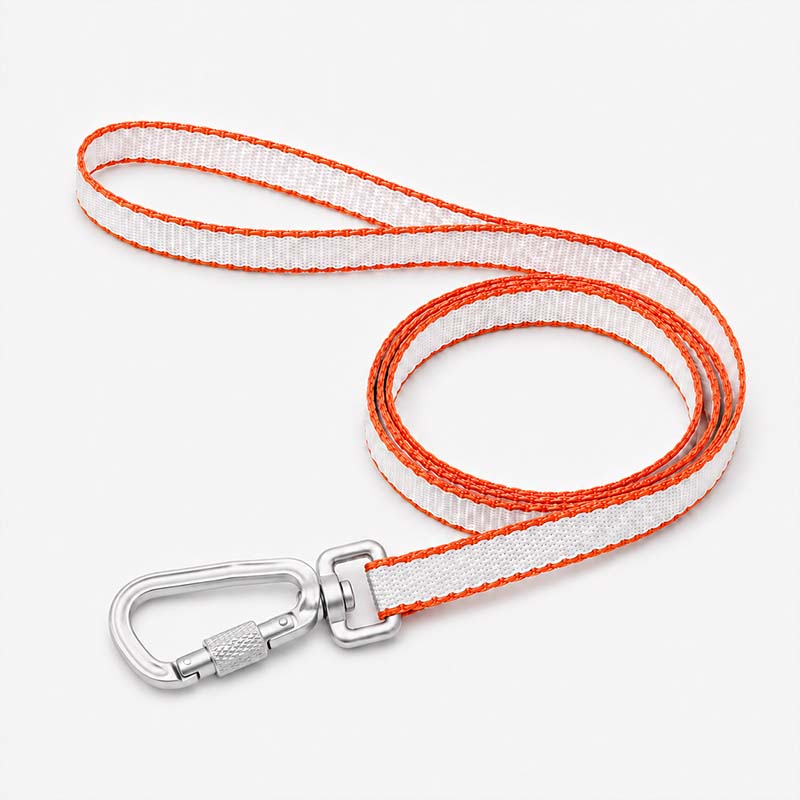
    White and orange FeatherStrong UHMWPE dog leash; clip material: Aircraft-Grade Aluminum
    The FeatherStrong ultralight leash uses 10 mm UHMWPE webbing. Select the length on the product page.

    Before attaching either, check your dog’s collar fit. Our dog collar measuring guide explains how to measure, read a size chart, and check the fitted collar.

    Need a custom leash length?

    If the standard lengths do not suit your walking setup, you can request a custom FeatherStrong leash length. Choose a length that gives your dog appropriate working room and feels manageable in your hand.

    Use the custom sizing request guide to define the endpoints and units. Then email wendy.soliszen@gmail.com with the product name or link, your requested length and units (cm/in or m/ft), and your delivery country. Specify whether you mean the webbing length or the overall length including the clip and handle. We’ll confirm the available options, pricing, and lead time before you order.

    Common questions about leash length

    Is 150 cm the same as a 5 ft leash?

    It is approximately 5 ft. The exact conversion is 4.92 ft; similarly, 180 cm is approximately 6 ft. Use the manufacturer’s stated metric measurement when comparing closely sized products.

    Which length is better for a puppy?

    Start with enough length for slack and a clip that suits the puppy’s attachment ring and size. A lightweight everyday leash around 1.5–1.8 m is a useful option to consider. The shortest leash is not necessarily the easiest or most comfortable.

    Can I use 180 cm for recall training?

    You can practice very short check-ins, but 180 cm is still an everyday walking length. For recall at a distance, use a purpose-built long line in a suitable open area and learn how to handle it safely.

    Do I need more than one leash?

    Only if different walks call for different equipment. Start with the length that suits your most frequent route. A separate short leash can be useful for specific transitions; it does not have to replace your everyday leash.

    Explore SOLISZEN dog leashes and compare the length, webbing, clip, and handle before choosing.